
DBT Therapy 101: A Beginner's Guide to Mastering Emotional Regulation

Have you ever felt like your emotions were in the driver’s seat, and you were just a nervous passenger strapped into the back? One minute you’re fine, and the next, a single text or a stressful work email sends you into a tailspin. If you’ve ever wished your brain came with an owner’s manual, specifically one that explained how to turn down the volume on intense feelings, you are definitely in the right place.
Enter dbt therapy.
While the name sounds a bit clinical and intimidating, Dialectical Behavior Therapy (DBT) is actually one of the most practical, "real-world" types of therapy out there. At MindfulCo Inc, we like to think of it as a toolkit for mastering emotional regulation. It’s not just about sitting on a couch and talking about your childhood (though there's a place for that, too); it’s about learning specific, tangible skills to help you navigate the ups and downs of life without feeling like you’re constantly drowning.
In this guide, we’re going to break down the basics of DBT in plain English, explore the four "superpowers" it teaches you, and show you why it might be the missing piece in your mental health journey.
What Does "Dialectical" Even Mean?
Before we dive into the skills, let’s tackle that big word: Dialectical. It sounds like something out of a philosophy textbook, but the concept is actually quite beautiful and simple.
A "dialectical" worldview means that two things that seem like opposites can both be true at the same time. In the context of therapy, the most important dialectic is Acceptance and Change.
In dbt therapy, we work on two things simultaneously:
Accepting yourself exactly as you are in this moment, including your struggles and your pain.
Acknowledging that you need to change your behaviors and learn new ways to cope in order to build a life that feels worth living.
It’s the "Yes, And" of mental health. You are doing the best you can and you can do better. When we stop fighting against the reality of our situation and start accepting it, we actually gain the power to change it. This balance is the secret sauce to mastering emotional regulation.

A simple, hand-drawn sketch of a seesaw balancing a heart (Acceptance) and a gear (Change), representing the dialectical balance.
The Four Pillars of DBT Skills
DBT isn't just a vague theory; it’s divided into four very specific modules. Each one is designed to help you tackle a different area of your life where emotions tend to get messy.
1. Mindfulness: The Foundational Skill
In dbt therapy, mindfulness is the "anchor." Everything else is built on top of it. But we’re not just talking about sitting cross-legged on a mountain top for hours. In DBT, mindfulness is about being "where your feet are."
It’s the practice of observing your thoughts, feelings, and physical sensations in the present moment without judging them as "good" or "bad." When you practice mindfulness, you learn to step back and become an observer of your own mind. Instead of being the anger, you notice, "Oh, I am feeling a wave of anger right now." That tiny bit of space between the feeling and the reaction is where your power lives.
2. Distress Tolerance: The Fire Extinguisher
We’ve all had those moments where our emotions feel like a literal fire. Your heart races, your face gets hot, and you feel like you might explode. Usually, when we feel this way, we do something to make it stop, which often results in making the situation worse (like sending a nasty text or reaching for a harmful coping mechanism).
Distress tolerance skills are your fire extinguisher. They are designed to help you survive a crisis without making it worse. These skills include:
TIPP: Using cold water, intense exercise, or paced breathing to literally change your body chemistry.
Radical Acceptance: Acknowledging a situation as it is, even if it’s painful, so you can move forward instead of staying stuck in "it shouldn't be this way."
Self-Soothing: Using your five senses to ground yourself when things feel overwhelming.
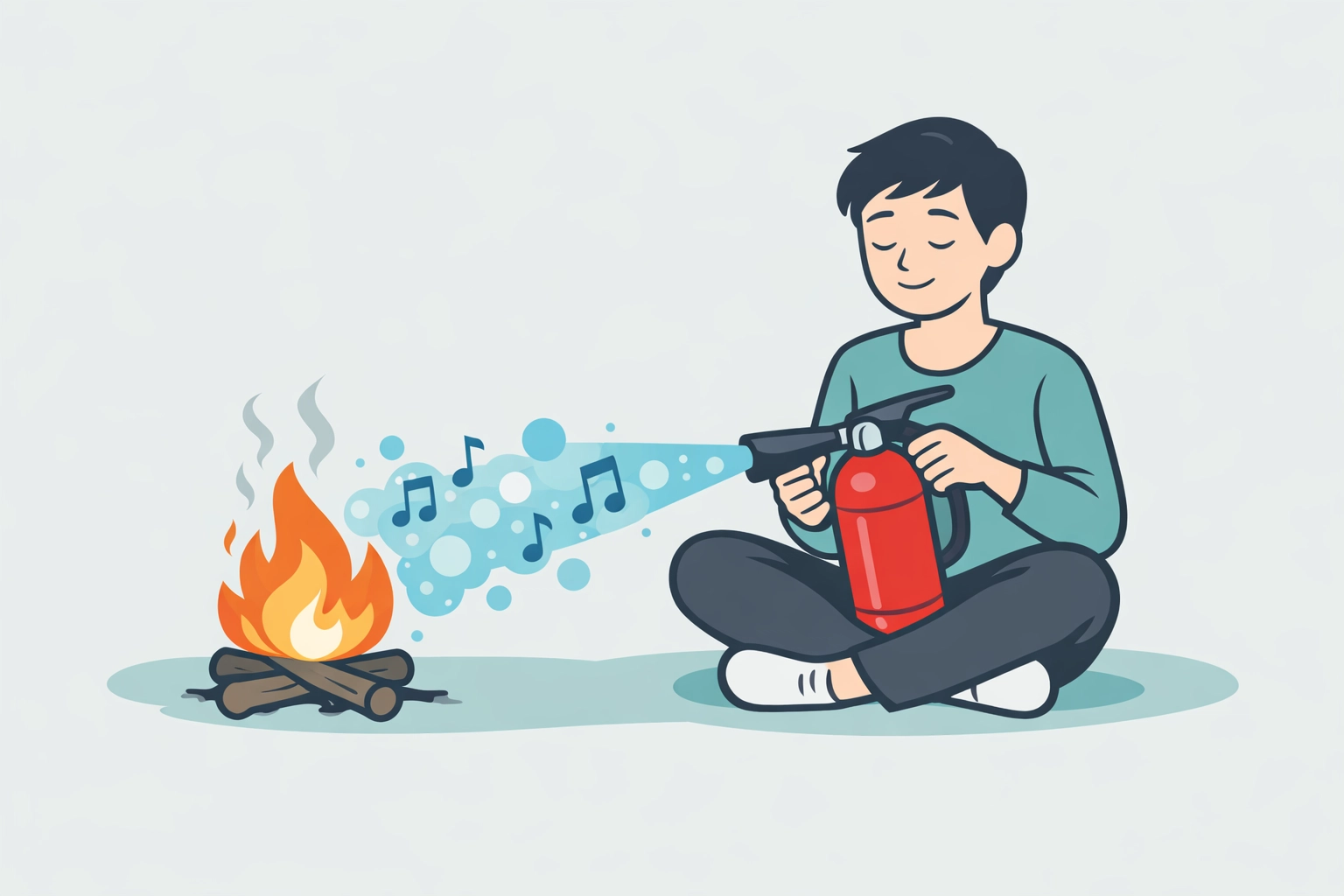
An animated-style illustration of a person calmly holding a fire extinguisher labeled "Distress Tolerance" in front of a small flame, symbolizing staying grounded during a crisis.
3. Emotion Regulation: The Thermostat
If distress tolerance is the fire extinguisher for emergencies, emotion regulation is the thermostat for everyday life. This module is all about mastering emotional regulation so that your "baseline" feels more manageable.
Through these skills, you learn to identify and label your emotions (it’s hard to fix what you can’t name!) and understand what they are trying to tell you. One of our favorite skills here is Opposite Action. If you feel a wave of sadness that tells you to isolate and stay in bed, you intentionally do the opposite, like going for a walk or calling a friend. It’s about not letting your emotions dictate your every move.
You can learn more about how these skills integrate with other challenges in our complete guide to DBT therapy.
4. Interpersonal Effectiveness: The Relationship Compass
Let’s be real: people are often the source of our biggest emotional triggers. Whether it’s a partner, a parent, or a boss, navigating relationships is tough. Interpersonal effectiveness skills teach you how to ask for what you need, say "no" when you need to, and manage conflict while keeping your self-respect intact.
One of the most popular tools here is DEAR MAN, a step-by-step script for having difficult conversations. It helps you stay focused on your goals without letting the conversation devolve into a shouting match. At MindfulCo Inc, we see these skills transform the way people interact with the world, turning high-conflict relationships into healthy, supportive ones.

A whimsical sketch of two people connected by a bridge, with a compass needle pointing toward a heart, representing effective communication.
Is DBT Right for You?
Originally, DBT was developed to treat Borderline Personality Disorder (BPD), but over the years, research has shown it is incredibly effective for a wide range of struggles. If you find yourself nodding along to any of these, dbt therapy might be a great fit:
High-Functioning Anxiety: If you’re constantly "on" and your mind won't stop racing, DBT can help you find your "Wise Mind." (Check out our post on 7 signs you’re ready for anxiety therapy).
Depression: When you feel stuck in a cycle of low energy and negative thoughts, the "change" skills in DBT can help pull you out.
Trauma: Mastering emotional regulation is a key part of trauma recovery, helping you manage the triggers that often feel unpredictable.
Relationship Issues: If you feel like your relationships are a constant rollercoaster, the communication tools in DBT are a game-changer.
How We Do It at MindfulCo Inc
At MindfulCo Inc, we believe therapy shouldn't feel like a chore. Our approach to dbt therapy is friendly, supportive, and tailored to your unique life. We don't just want you to understand these concepts; we want you to be able to use them while you’re standing in line at the grocery store or dealing with a difficult relative during the holidays.
Usually, a full DBT program involves both individual therapy and a skills-training group. Think of individual therapy as the place where you process your week, and the skills group as the "classroom" where you learn the actual tools. It’s a comprehensive approach that ensures you aren't just talking about your problems, but actively building a life that feels good.
If you’re curious about our specific methods, feel free to explore our approach or check out our full list of treatments.

A warm, friendly sketch of a therapy room with a plant and a comfortable chair, showing a "safe space" environment.
Taking the First Step
Mastering emotional regulation doesn't happen overnight. It’s a journey, and like any journey, it starts with a single step: and maybe a few stumbles along the way. The beauty of dbt therapy is that it expects the stumbles. It’s built for real people with real, messy lives.
You don't have to keep living at the mercy of your emotions. There is a way to find the middle path between the logic of your head and the intensity of your heart. Whether you are dealing with anxiety, depression, or just a general sense of being overwhelmed, these skills can provide the stability you’ve been looking for.
If you’re ready to stop feeling like a passenger and start taking the wheel, we’re here to help. You can browse more of our resources or take a look at our blog for more tips on navigating your mental health journey.
Remember: You are doing the best you can. And you have the power to learn something new. That’s the dialectic of growth, and it’s a pretty amazing place to start.



Comments